Publications & Posters
Explore some of our student-led conference posters, journal submissions, and IEEE EMBS conference entries.
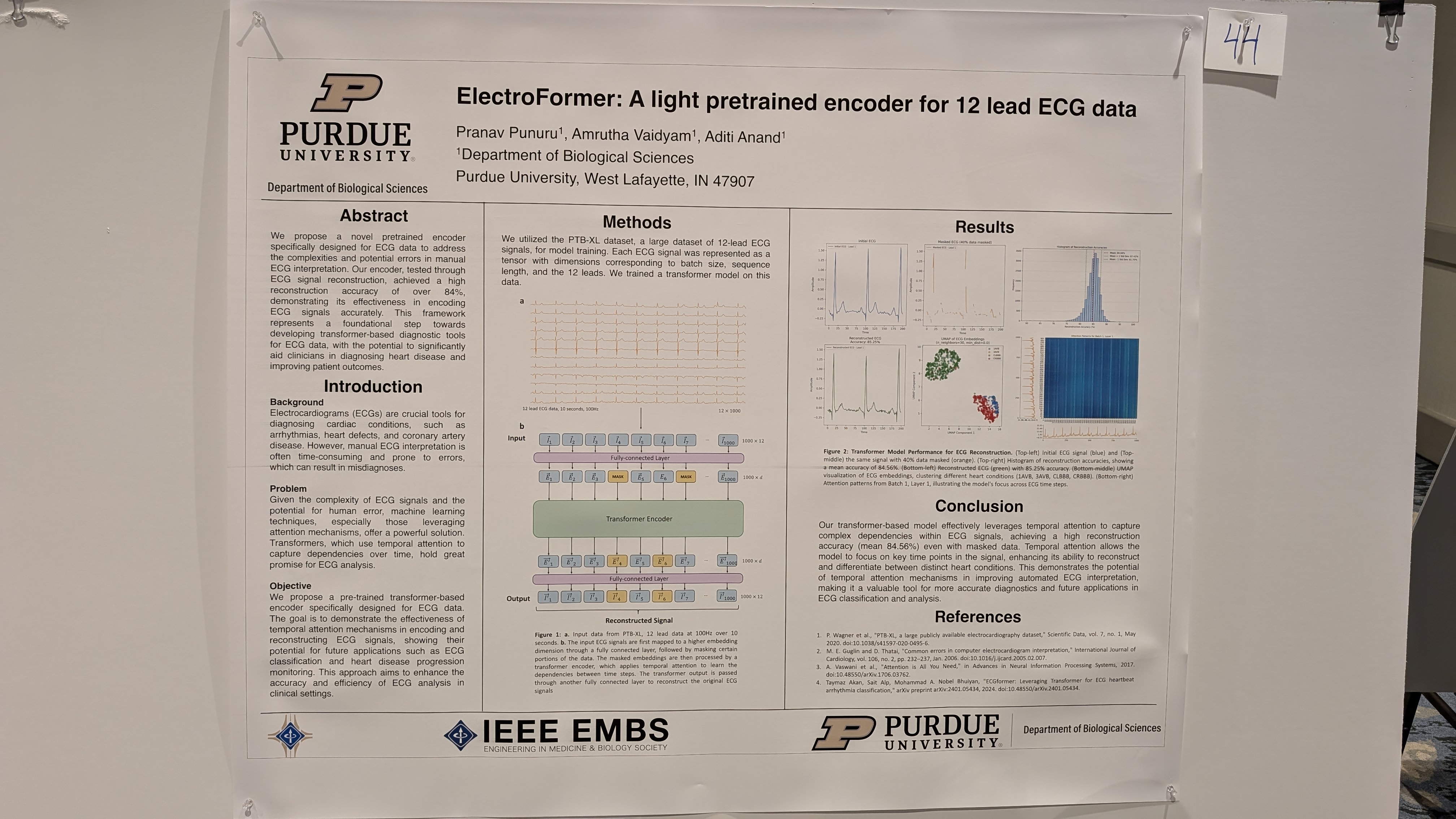
EMBS Conference Posters
EMBS Published Reports
Report On Predicting 7-day Average of COVID-19 Cases And The Positivity Rate
- A group of our members devised a method for predicting the 7-day average average of COVID-19 cases and the positivity rate using predictive analysis and deep learning models. Using PyTorch and scikit-learn, they took the data, normalized it, and then fed it to a LSTM neural network in order to predict results based on this data. To learn more about this solution, click the link below to pull up their report.
EMBS Speeches
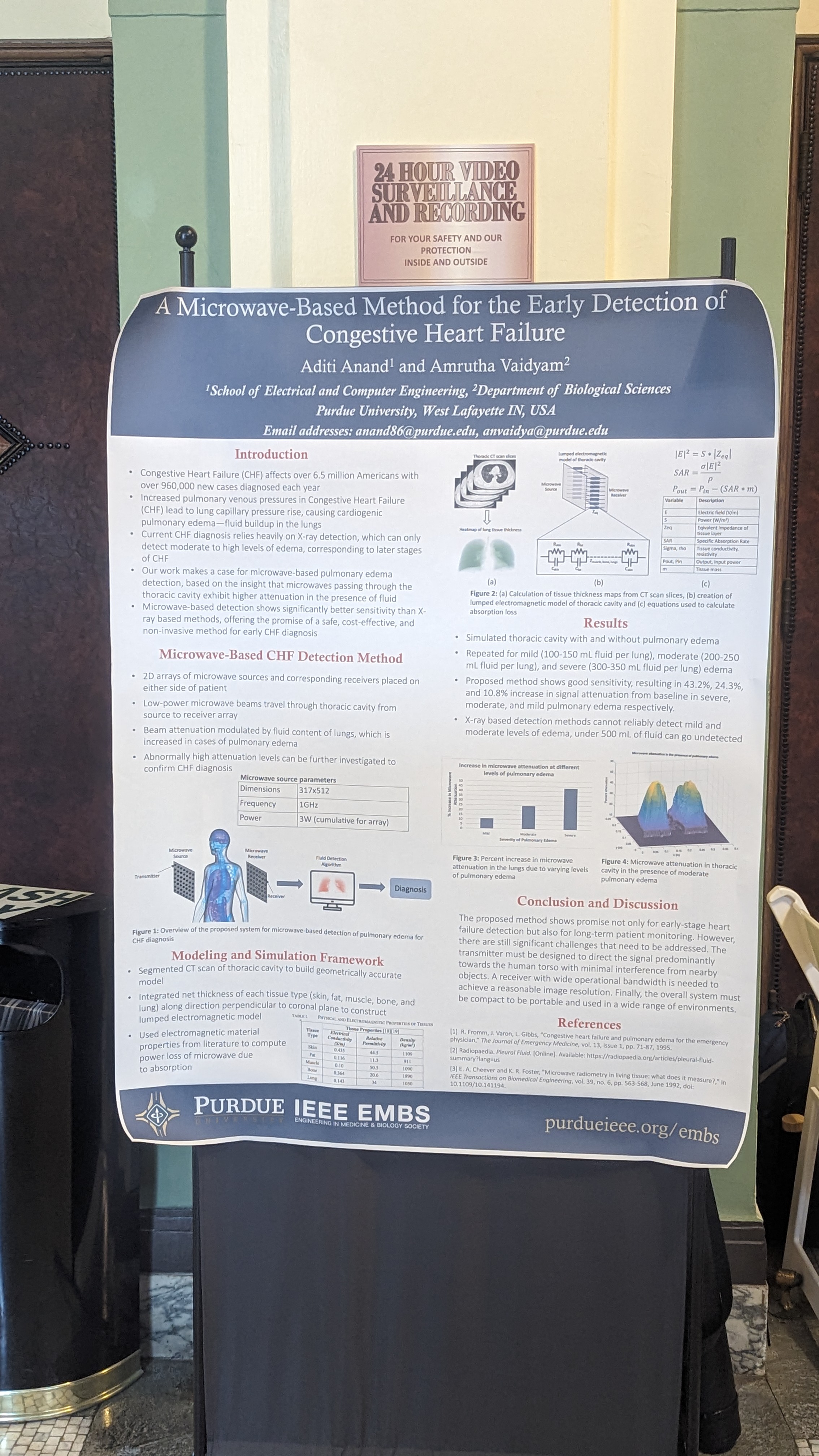
Speech On Congestive Heart Failure Detection
- Some of our members gave a speech at a conference about a system they had developed meant to detect congestive heart failure. Congestive heart failure is a condition which affects over 5 million Americans, with almost a million more people being diagnosed with it each year. As such, members of our club developed a solution towards detecting this ailment. These members proposed this solution using microwaves to improve the accuracy with which they could detect pulminary edemas, and they gave a speech about their solution at a conference. Click the link below to learn more about their system and read their speech:
EMBS Competition Reports
Competition Report On AI Implementation For Drug Discovery
- A group of our members and developed a solution using artificial intelligence and neural networks in order to predict drug effectiveness, which was done through a drugs docking score to a protein. The docking score is a number representing how well two molecules join together, and this score is a very important measure during a drug’s discovery phase. The drug discovery phase can be a slow process because they want to ensure that they have the best candidates for testing, but doing this by hand can be time consuming. That is where our team came in to propose a solution to this problem. Using a neural network they had construted in python and C++, the team was able to accurately predict the docking score of different drug candidates. To learn more about their solution, click the link below to pull up the full report they had made: